

By creating a calibration profile, PatternScan Pro corrects your camera's specific lens distortion and delivers accurate measurements. You photograph a checkerboard pattern (25 mm squares) from different angles, the app analyzes the images and calculates a precise calibration profile. You'll need the printed checkerboard pattern, good lighting, and 15-30 photos from different perspectives.
Every camera has unique optical characteristics. Without calibration, lens distortion – especially at image edges – causes measurement errors when digitizing patterns. Calibration corrects this distortion and delivers scale-accurate results.
The comparison shows how calibration corrects lens distortion. The DINA4 lines appear curved in the uncorrected photo. After applying the calibration profile, lines that should be straight are actually straight.


Download the checkerboard reference and print it on a standard printer. Use "100% Scale" setting – no automatic fitting. The squares must be exactly 25 mm.
Important: After printing, verify with a ruler that squares actually measure 25 mm. If the size is incorrect, check out this guide it explains what you can do to fix it.
Lay the printed checkerboard reference completely flat on an even surface. Any creases, waves, or curves reduce calibration accuracy. Provide bright, diffused lighting without harsh shadows on the reference.
Smartphone Use your main rear camera (not ultra-wide or telephoto). Tap the checkerboard on screen to focus.
DSLR Standard focal length (35-85 mm), f/5.6-f/8 aperture. Keep ISO low (100-400) for sharp images. Ensure there is no motion blur.


Take 15-30 photos of the checkerboard reference from different angles, distances, and orientations. The reference must be fully visible and sharp in every photo. The more diverse your shots, the more accurate the calibration.
Recommended distance: In most images, the checkerboard reference should fill at least 50% of the frame. Photograph from different angles – from directly above, slightly tilted left, right, closer, further away. Tap the reference on screen to set focus.
Photograph the checkerboard centered in the frame. Take multiple shots at various distances and slight angles. These images form the baseline of your calibration and show how your camera handles frontal captures. You need 3-4 images from this perspective.
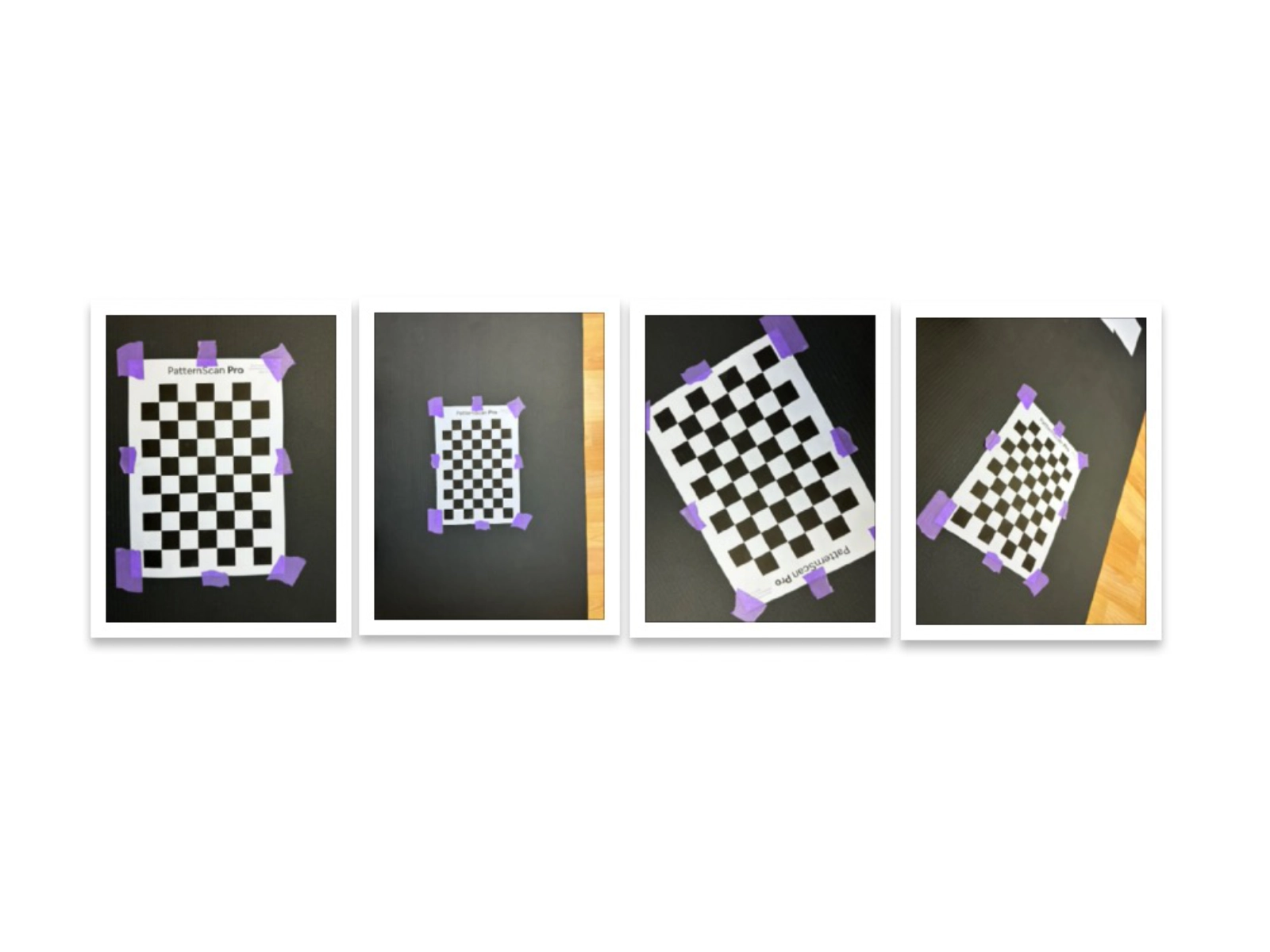
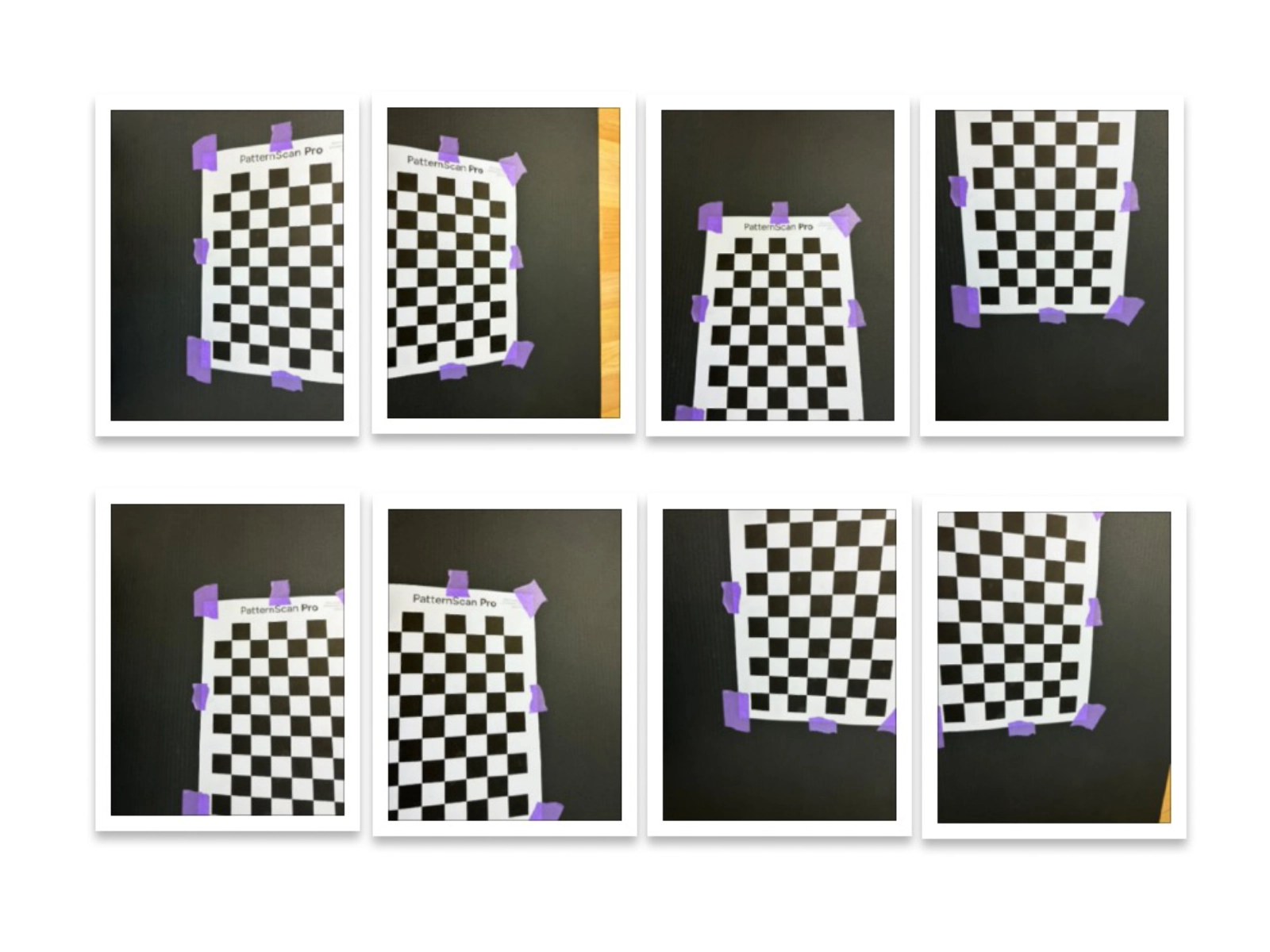
Photograph from top, bottom, left, and right – each with a slight angle. The outer row of the checkerboard should be cut off at the image edge. The edge areas of your sensor often show the strongest distortion, making these images critical for precision. Take 4 images, one per side.
Photograph at slight angles from the corners. The outer row of the checkerboard should be cut off as well – the edges are most important for calibration. Perspectives capture maximum distortion and complete your camera's distortion profile. You need 4 images from this perspective.
Position yourself relatively straight above each corner. The chessboard should fill about 2/3 of the image. Photograph all four corners: top left, top right, bottom left, bottom right.
Repeat this from a greater distance. The chessboard should fill about 1/4 of the image.
There should be 8 corner images in total. Make sure that the outer edge of the chessboard is cropped so that the edge of the image can be analysed.

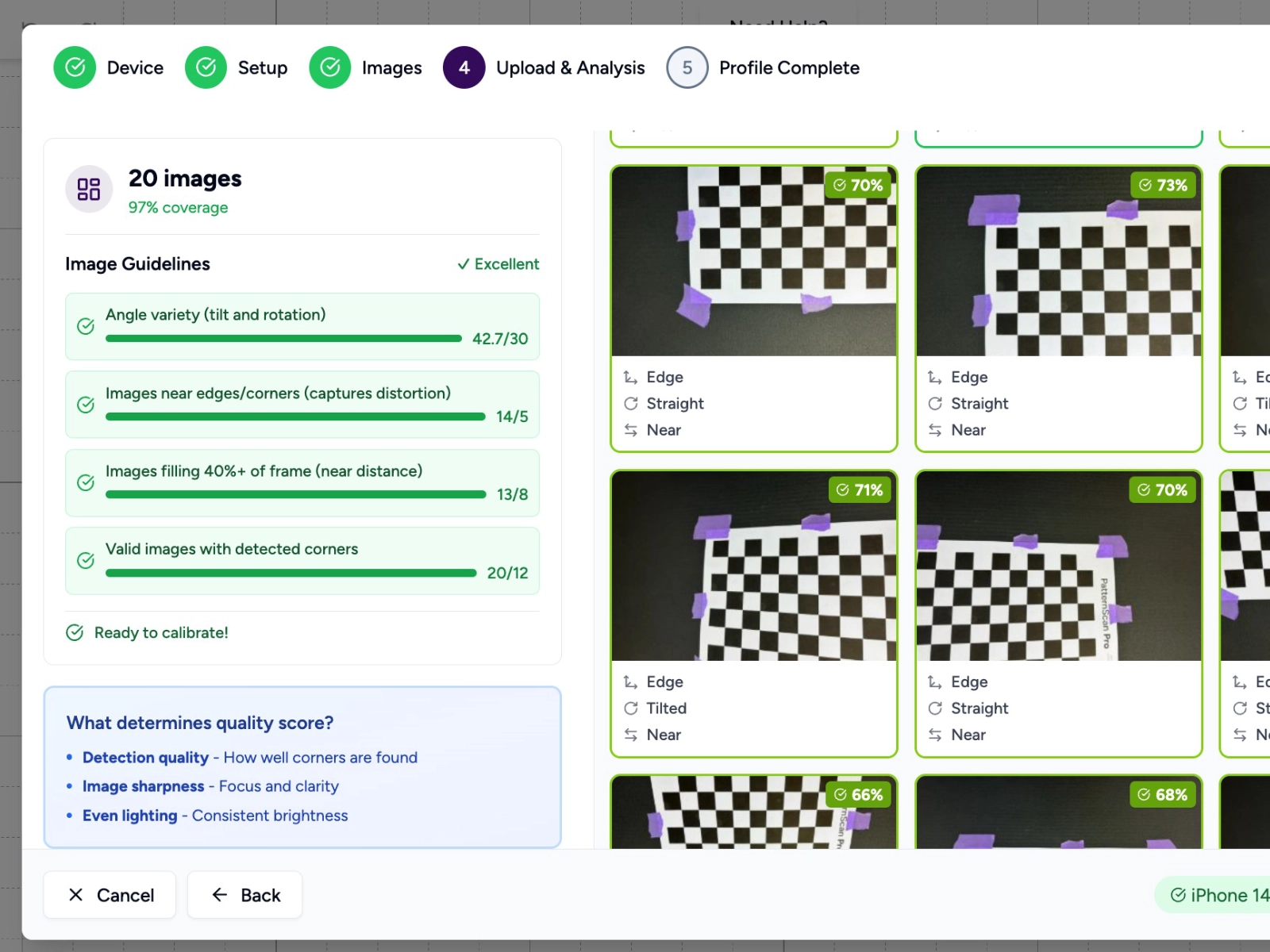
The wizard shows you which perspectives you've covered and which are still missing. You receive a rating for each individual image and a quality score for your calibration profile. A good calibration scores 90% or higher. If the score is lower, the wizard shows you exactly which images you should add.
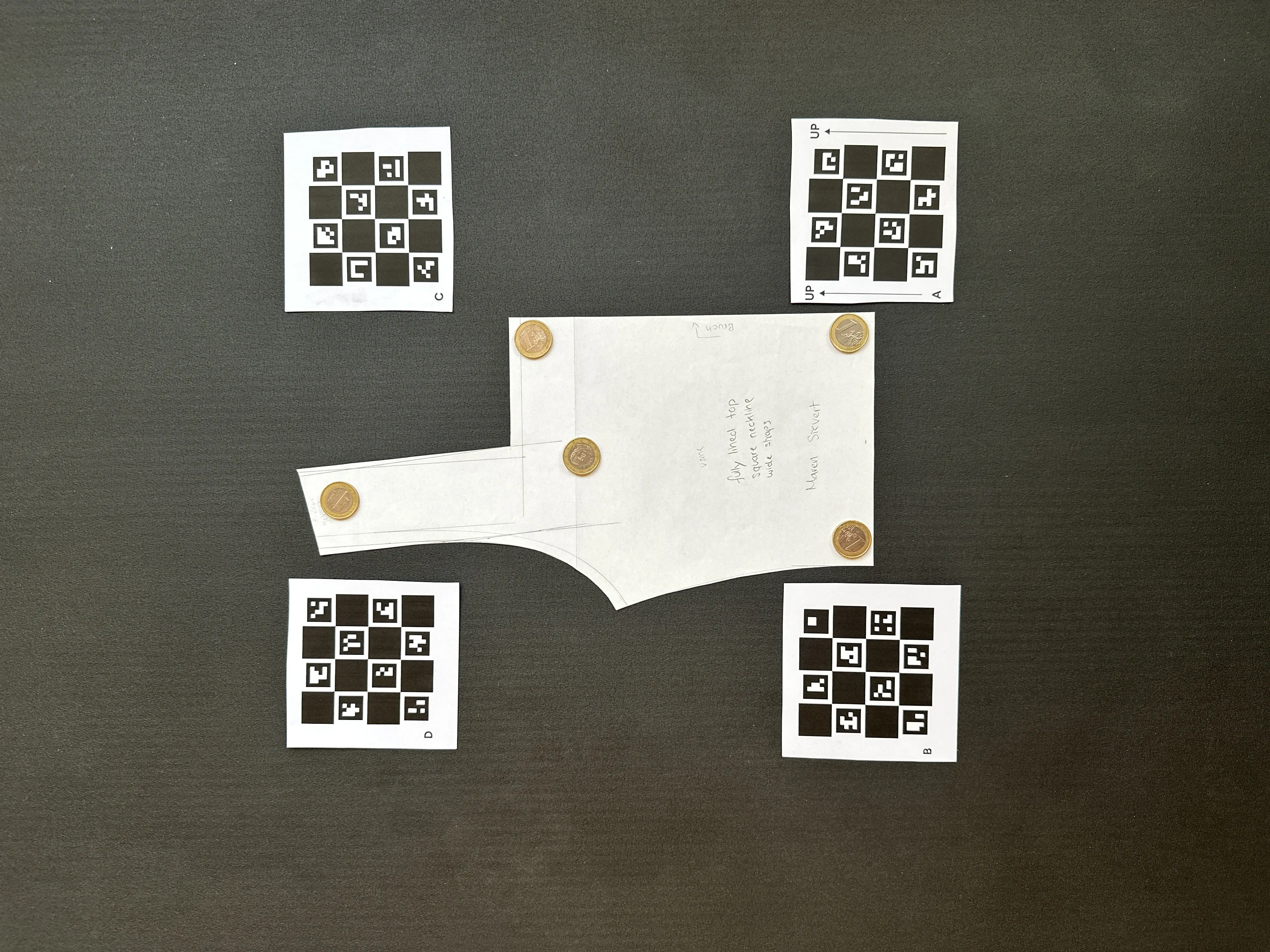
For your next pattern upload, the calibration profile should be active (the name of the profile shows green in the navbar). Photograph your pattern with the same camera you used for calibration, with the four Reference Tiles around it, and upload the photos on the desktop.
PatternScan Pro applies your profile automatically and corrects the lens distortion in the background. The profile is used for all future digitizations with this camera. Measure a known length after importing to check the result.
If you encounter problems, please feel free to send us an email!

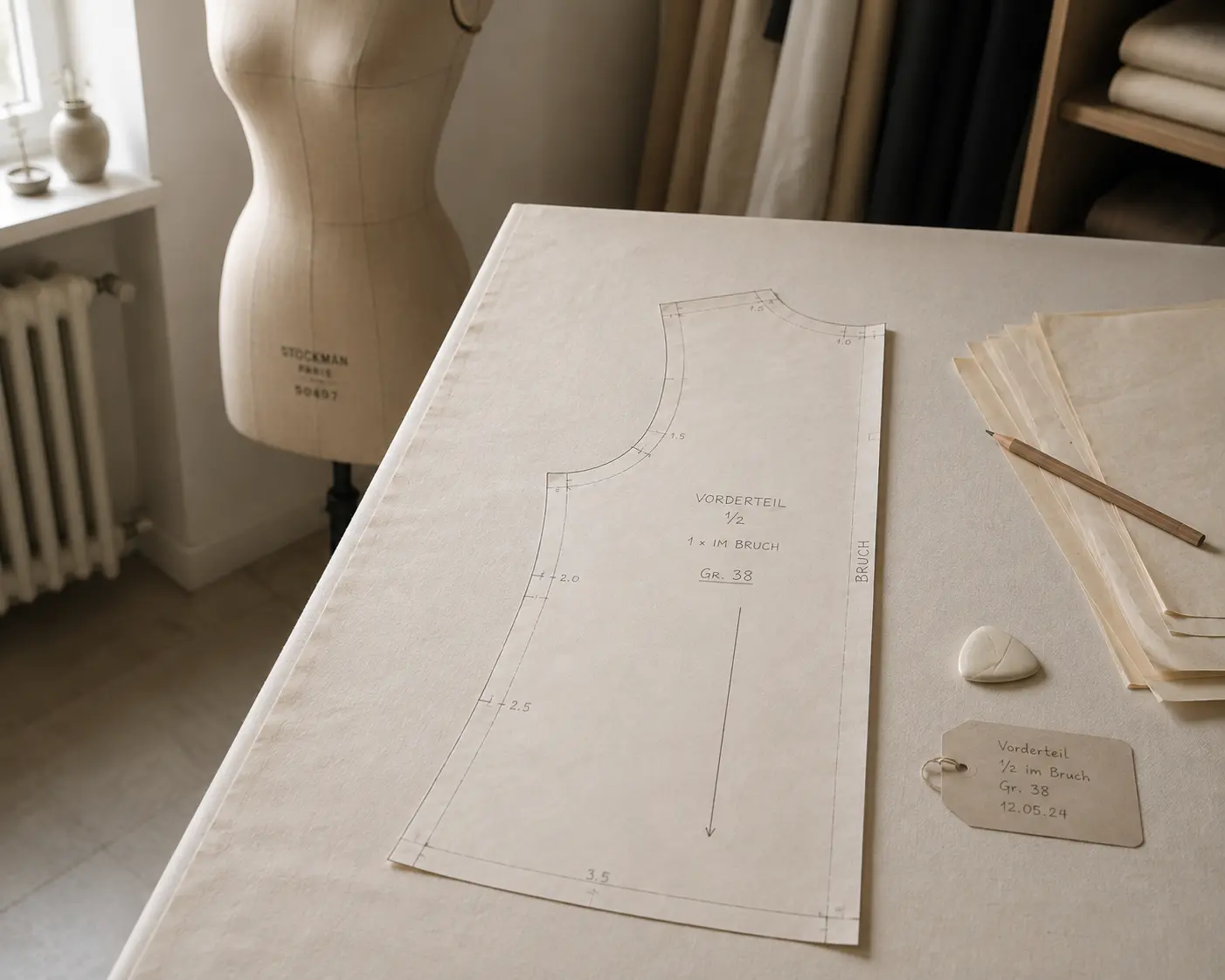
Digitize sewing patterns without tracing.
Test PatternScan Pro free for 14 days with the full feature set. You need your smartphone, a printer and one pattern you always wanted digital.
Photograph your paper pattern and get an automatically scaled digital version with PatternScan Pro.
Usage